
Car History Check vs Inspection: What Matters?
- Shobab Riaz
- Jun 22
- 6 min read

A used car can look clean, drive well for ten minutes and still be the wrong buy. That is why the question of car history check vs inspection matters so much. One tells you about the vehicle’s recorded past. The other tells you what condition it is actually in now. If you are about to spend thousands on a used car or van, confusing the two can be an expensive mistake.
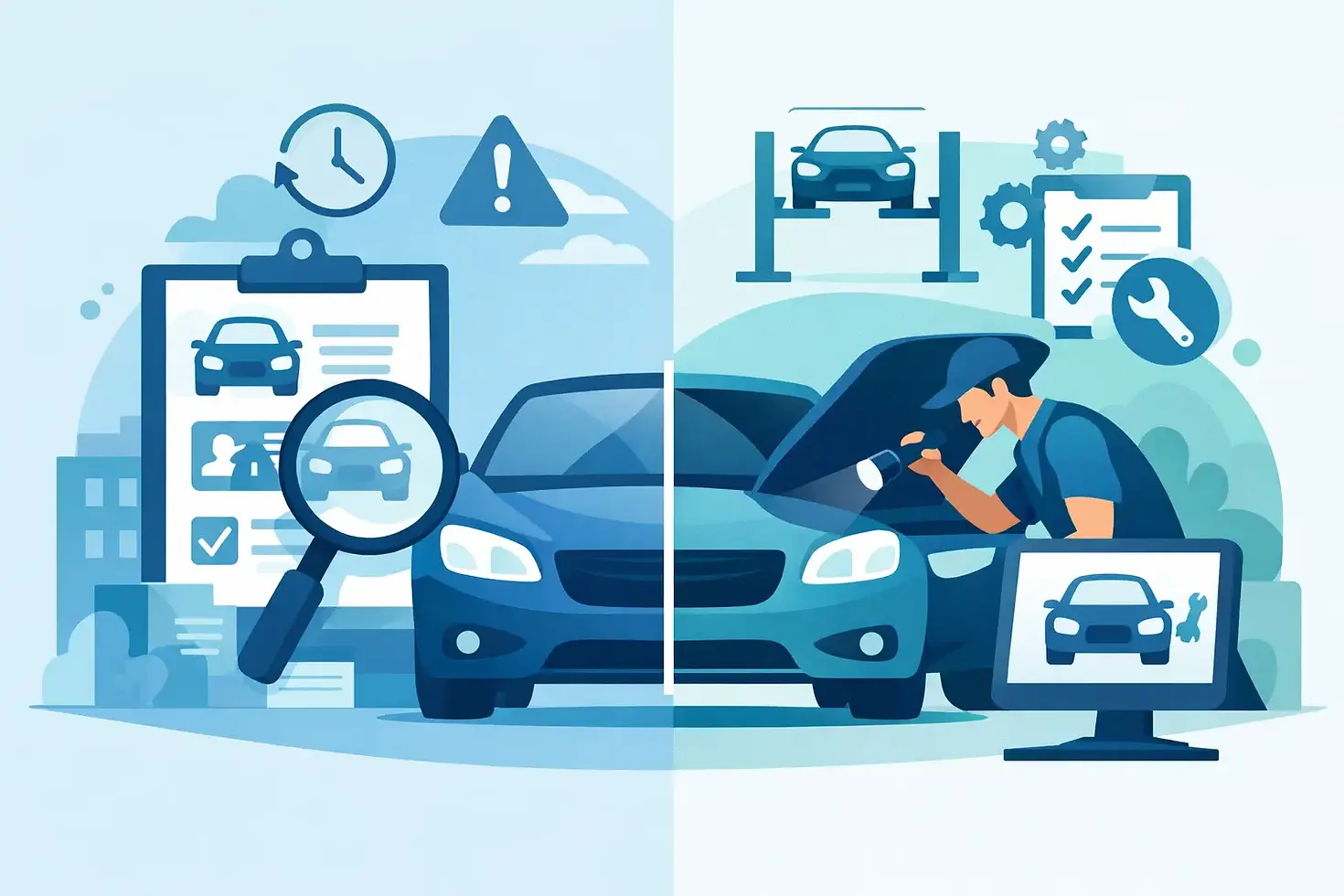
Car history check vs inspection - the basic difference
A car history check is a records search. It uses the registration and vehicle data to flag issues such as outstanding finance, theft markers, insurance write-off history, previous keepers, MOT history and whether the mileage appears consistent with recorded data. It is useful, fast and relatively low cost.
An inspection is a physical assessment of the vehicle itself. A qualified assessor checks its mechanical condition, bodywork, structure, signs of accident repair, warning lights, tyres, brakes, suspension, engine bay and, depending on the service, diagnostic systems, underbody condition and road test performance. It shows you what the car is like now, not just what has been recorded about it.
Both have value. Neither replaces the other.
What a car history check can tell you
A proper history report can quickly uncover major red flags that a seller may not volunteer. If a car has outstanding finance, that matters because the finance company may still have a legal interest in it. If it has been recorded as stolen or written off, that changes the risk profile immediately. If the mileage record does not make sense, you need to ask serious questions.
It can also help you spot patterns. Repeated MOT advisories for corrosion, tyre wear or suspension issues can suggest the vehicle has been maintained on the cheap. A very high number of previous keepers in a short period is not always a deal-breaker, but it should prompt closer scrutiny. The same applies if the MOT history shows repeated failures for similar defects.
This is the strength of a history check. It gives context. It helps you decide whether a car is worth pursuing before you travel, negotiate or book anything else.
What a history check does not tell you
This is where buyers often get caught out. A history report cannot tell you whether the clutch is near the end of its life, whether the gearbox is slipping, whether the paint depth suggests poor accident repairs, or whether the suspension is tired enough to generate a four-figure bill after purchase.
It also cannot confirm the standard of any previous repair. A vehicle may have no write-off record at all and still have had crash damage repaired badly outside the insurance system. It may have a clean-looking MOT history and still be hiding oil leaks, fault codes, poor panel alignment, underbody corrosion or signs of flood exposure.
In plain terms, a car history check only knows what has been recorded somewhere. Used vehicles do not always tell the full story on paper.
What an inspection can tell you
A proper pre-purchase inspection is where condition becomes clear. It looks beyond adverts, dealer patter and a quick glance around the forecourt. It checks whether the car starts properly, runs correctly, changes gear as it should, steers straight, brakes safely and shows evidence of proper care rather than cosmetic preparation.
A good inspection can identify worn tyres, brake issues, oil leaks, cooling system concerns, battery weakness, suspension wear, steering faults, previous accident damage, poor repairs and dashboard warning signs. More thorough inspections also use diagnostics to identify fault codes that may not be obvious on a short test drive.
This matters because many expensive problems are mechanical or structural, not administrative. They do not show up in a standard records search. They show up when someone independent inspects the car properly.
What an inspection does not replace
An inspection is powerful, but it is not a substitute for a history check. A car can be driving well today and still have hidden legal or financial baggage. For example, a tidy and mechanically sound vehicle could still have outstanding finance, a mileage discrepancy in its records or a previous insurance category marker.
That is why the right question is not whether you need a history check or an inspection. The better question is what level of risk you are prepared to accept without both.
Car history check vs inspection - which is more important?
If you are choosing only one because of budget, the answer depends on the car, the seller and how exposed you are financially.
For a lower-value runaround from a known source, some buyers start with the history check because it is quick and cheap. It can rule out obvious problems before spending more. That is sensible as a first filter.
But if you are serious about buying the vehicle, especially from a private seller, a dealer you do not know, or at a distance, the inspection usually carries more weight. Why? Because the biggest immediate financial shocks after purchase often come from undisclosed condition issues rather than paperwork alone. A worn timing chain, hidden body repairs or gearbox faults will cost you money whether the records look clean or not.
For higher-value cars, family vehicles, vans for work, or anything where downtime would hit hard, relying on a history report alone is weak protection.
Why sellers prefer you to stop at the history check
A history check feels reassuring because it produces a report. Buyers see pages of data and assume they have done their homework. Sellers know that many people will take comfort from that and move forward without arranging an independent inspection.
That suits the seller if the vehicle has present-day faults. A clean finance result does not expose poor paintwork repairs. An MOT pass does not guarantee the car is free from underlying mechanical issues. A polished bonnet and a fresh valet can hide a lot more effectively than most buyers realise.
This is exactly why independent inspections matter. They shift the process from trust me to prove it.
When both checks matter most
There are situations where cutting corners is particularly risky. One is buying from a private seller, where there may be less comeback if serious faults emerge. Another is buying a vehicle located far from home, where you may feel pressure to proceed once you have travelled. Auction purchases are another category altogether, because the scope to challenge condition later is often limited.
The same applies to nearly new cars that appear too smart to worry about. Cosmetic condition can be excellent while repair quality underneath is poor. Likewise, older vehicles with full service history can still have substantial wear that only a proper inspection will reveal.
For used vans, the case is even stronger. A van may have had a hard commercial life despite looking decent in photographs. Suspension wear, clutch issues, load-related strain and underbody condition all deserve proper checking.
A smart buying process for used cars and vans
The safest approach is straightforward. Start with the advert and seller conversation. If the basic story makes sense, run a history check to screen for financial, identity and recorded background problems. If that comes back acceptable and you are still interested, arrange an independent inspection before committing.
That order keeps costs sensible while protecting you from the two main types of used vehicle risk - what is on record and what is physically wrong.
For many buyers, the real value of the inspection is not just fault finding. It is decision support. Sometimes the result is walk away. Sometimes it is buy with confidence. Sometimes it is proceed, but renegotiate hard because the defects do not match the asking price. All three outcomes can save you money.
The real cost of getting it wrong
Buyers often hesitate over inspection costs, then think nothing of risking thousands on the purchase itself. That is backwards. The cost of a proper assessment is small compared with replacing tyres, sorting brakes, repairing accident damage, dealing with engine faults or discovering that the car was not honestly represented.
At Pre Inspection Clinic Ltd, that is the point of an independent check. We work for the buyer, not the seller. The aim is not to talk you into a purchase. It is to give you clear evidence so you can make the right call.
A history check can tell you whether a vehicle’s past raises concerns. An inspection can tell you whether its current condition should stop you buying it. If you want proper protection, treat them as partners, not alternatives.
Before you hand over money, make sure someone has checked more than the paperwork. A used vehicle only has to fool you once.


Comments