

Car Accident Damage Check Before You Buy
- Shobab Riaz
- 7 days ago
- 5 min read

A car accident damage check can be the difference between buying a sound used vehicle and inheriting somebody else’s expensive problem. A clean-looking car or van may have been repaired after a collision, and not every repair is unsafe. The concern is whether the work was carried out properly, whether structural damage was involved and whether the seller has been open about its history.
For a used vehicle buyer, appearance alone is not evidence. Fresh paint, polished bodywork and a reassuring advert can hide poor panel alignment, weakened mounting points, corrosion, warning lights that have been cleared or tyres wearing unevenly because the geometry is wrong. You need a clear, independent view before money changes hands.
Why accident damage matters when buying used
A properly repaired vehicle can remain safe and dependable. Minor cosmetic damage, such as a scuffed bumper or replaced wing, is not automatically a reason to walk away. It may even represent good value if the repair is documented, the price reflects the history and an inspection finds no wider concerns.
The risk rises when damage has affected the vehicle’s structure, suspension, steering, airbags or safety systems. Modern cars are designed with crumple zones, sensors and precisely positioned components. A vehicle may drive reasonably well on a short test drive while still carrying evidence of poor repairs that affect handling, tyre life, corrosion resistance or crash protection.
There is also the financial side. Accident history can reduce resale value, make insurance more complicated and leave you facing repairs that were not apparent at purchase. For a family car, commuter vehicle or working van, unexpected downtime is more than an inconvenience. It can affect school runs, work commitments and income.
What a car accident damage check should look for
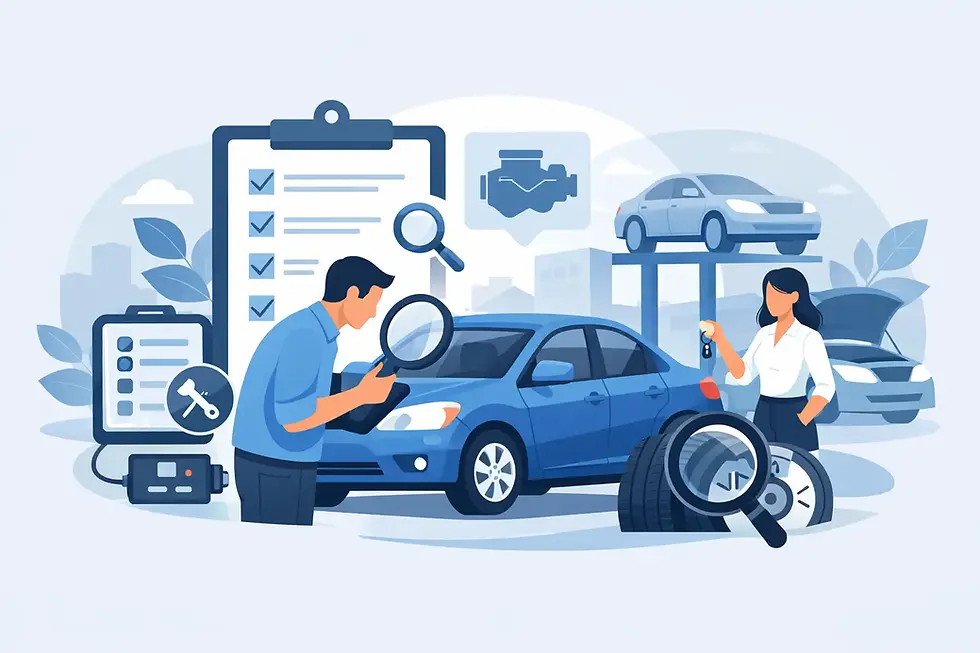
A meaningful inspection does not stop at walking around the vehicle. It considers whether the visible condition, underbody, diagnostic information and road behaviour tell the same story. If they do not, that is where further questions need to be asked.
Panel gaps, paint and repair quality
Inspectors look closely at the gaps around bonnet, doors, tailgate, wings and bumpers. Uneven gaps do not always prove accident damage, particularly on older vehicles, but they can indicate panels have been removed, replaced or refitted poorly. Doors and tailgates should open, close and sit correctly without catching or needing force.
Differences in paint shade, texture or gloss can reveal repainting. Look for paint on rubber seals, trim, wheel-arch liners or bolts, as these may suggest rushed masking. A paint depth gauge can help identify filled or repainted areas, but readings must be interpreted in context. Factory paint thickness varies between manufacturers and panels.
Poor repairs often show up in the details: ripples in reflected light, filler cracking, overspray, loose trim or damp inside a lamp unit. These are not merely cosmetic points. They can show the standard of work carried out on the vehicle.
Structural and underbody evidence
The most serious issues are often underneath or behind trim rather than in plain sight. An underbody inspection can reveal distorted chassis rails, damaged floor sections, fresh underseal applied over older damage, poor-quality welding or corrosion around repaired areas.
Attention should also be paid to the front and rear crash structures, suspension mounting points and boot floor. Fresh sealant, non-original welds or irregular seams may be legitimate following a professional repair, but they need proper assessment. A seller’s assurance that a vehicle was only “lightly damaged” is not a substitute for physical evidence.
Suspension, steering and tyre wear
A collision with a kerb, pothole or another vehicle can affect steering and suspension components. During a road test, warning signs include pulling to one side, a crooked steering wheel when travelling straight, vibration through the wheel, knocking over uneven roads or an unsettled feel under braking.
Tyres can also tell an honest story. Uneven inner or outer-edge wear may point to alignment problems, worn suspension components or previous impact damage. One worn tyre is not proof of an accident, but a pattern of wear combined with visible repairs deserves investigation.
Safety systems and diagnostic faults
Airbags, seatbelt pretensioners, parking sensors, cameras and advanced driver assistance systems can all be affected after a collision. Dashboard warning lights should illuminate when the ignition is switched on and go out as expected. A light that stays on is an obvious concern, but no warning light does not guarantee everything is working correctly.
Diagnostic checks can identify stored fault codes, communication problems and evidence that needs further investigation. They are especially useful on newer vehicles with multiple electronic control units. However, diagnostics are one part of the picture, not a complete accident history check on their own.
Questions to ask the seller before viewing
Ask directly whether the vehicle has been involved in an accident, had insurance work completed or undergone body repairs. A genuine seller should be prepared to explain what happened and provide invoices, photographs or repair documentation where available.
Also ask whether the vehicle has ever been recorded as an insurance write-off. This is separate from asking about accident damage. Some repaired vehicles may be categorised, and that history should be disclosed and reflected in the price. If the answer is vague, changes during the conversation or does not match the vehicle’s condition, treat that as a warning rather than an inconvenience.
Do not be distracted by statements such as “it has just passed its MOT” or “it drives perfectly”. An MOT is not a detailed assessment of body repairs, accident history or the quality of previous work. Passing an MOT does not remove the need for an informed buying decision.
When visible damage is not the main concern
The most concerning vehicles are not always the ones with obvious scratches or dents. A minor scrape that has been honestly disclosed may be far less significant than a spotless vehicle with mismatched panels, unexplained paintwork and suspension behaviour that does not feel right.
Equally, age matters. An older, lower-value car may have had cosmetic repairs during its life without creating a serious safety issue. On a newer vehicle with complex electronics and a higher purchase price, the same uncertainty carries more financial risk. The right decision depends on the evidence, the repair standard, the asking price and your plans for the vehicle.
For a van, the inspection should also consider load area repairs, rear doors, floor condition and signs that structural damage may have been hidden by ply lining or racking. A working vehicle needs to be dependable, not simply presentable on collection day.
Why an independent inspection protects the buyer
The seller may be honest, but they are still selling the vehicle. Their view of “excellent condition” may not match yours, and a dealer preparation process is not the same as an independent condition assessment. You need someone assessing the vehicle for your interests, not for the sale.
An experienced assessor can combine a visual appraisal with underbody checks, diagnostics and a road test where suitable. That broader approach helps distinguish a well-repaired car from one with unresolved concerns. It also gives you practical evidence to negotiate on price, ask for repairs or walk away without second-guessing yourself.
Pre Inspection Clinic Ltd works for the buyer, not the seller, providing clear findings on mechanical condition, structural concerns and visible accident-repair evidence. The purpose is not to create worry where none is justified. It is to give you an honest basis for deciding whether the vehicle is worth buying.
Do not let time pressure make the decision
Sellers often say there is another buyer waiting or that the vehicle must be collected that day. Sometimes that is true. It still does not make an uninspected purchase safer. If a seller refuses reasonable time for checks or discourages an inspection, consider what they may not want examined.
A used car or van is a significant purchase. Take the time needed to check the condition properly, read the evidence and make your decision without pressure. The right vehicle will stand up to scrutiny.


Comments