Essential Vehicle Inspection Topics for Every Used Car Buyer
- Shobab Riaz
- Jun 15
- 4 min read

Buying a used car can be a smart choice, but it comes with risks. Hidden faults and overlooked issues can turn a great deal into a costly mistake. That is why understanding essential vehicle inspection topics is crucial. Knowing what to check and how to interpret the findings helps you make confident decisions. This guide covers the key areas you should focus on during a vehicle inspection. It will help you spot potential problems early and avoid surprises after purchase.
Why Vehicle Inspection Topics Matter
Vehicle inspection topics cover the critical parts and systems of a car that affect safety, performance, and value. When you know these topics, you can ask the right questions and request thorough checks. This knowledge protects you from buying a car with hidden damage or mechanical faults. It also helps you negotiate better prices based on the car’s condition.
For example, checking the engine and transmission can reveal costly repairs ahead. Examining the bodywork and chassis can uncover accident damage or rust. Testing brakes and suspension ensures the car is safe to drive. These topics are not just technical details - they are your tools for making a smart purchase.
Key Vehicle Inspection Topics to Focus On
When inspecting a used car, focus on these essential topics:
1. Engine and Transmission Condition
The engine is the heart of the vehicle. Look for signs of leaks, unusual noises, or smoke. Check the oil level and quality. A clean, amber oil is a good sign. Dark, gritty oil may indicate neglect. Test the transmission by shifting through all gears smoothly. Any jerking or slipping needs attention.
2. Brakes and Suspension
Brakes are vital for safety. Inspect brake pads and discs for wear. Listen for squealing or grinding sounds when braking. Test the suspension by pushing down on each corner of the car. It should bounce back smoothly without excessive noise. Worn suspension parts affect handling and comfort.
3. Bodywork and Frame
Look closely for dents, scratches, and rust spots. Check door gaps and panel alignment to spot previous repairs. Rust on the frame or undercarriage can be a serious problem. Minor cosmetic damage is less critical but still worth noting.
4. Electrical Systems and Lights
Test all lights - headlights, indicators, brake lights, and interior lights. Check the dashboard for warning lights. Test the horn, wipers, and power windows. Electrical faults can be expensive to fix and affect safety.
5. Tyres and Wheels
Inspect tyre tread depth and look for uneven wear. Uneven wear may indicate alignment issues. Check for cracks or bulges on the tyre sidewalls. Ensure the wheels are not bent or damaged.

How to Perform a Basic Vehicle Inspection
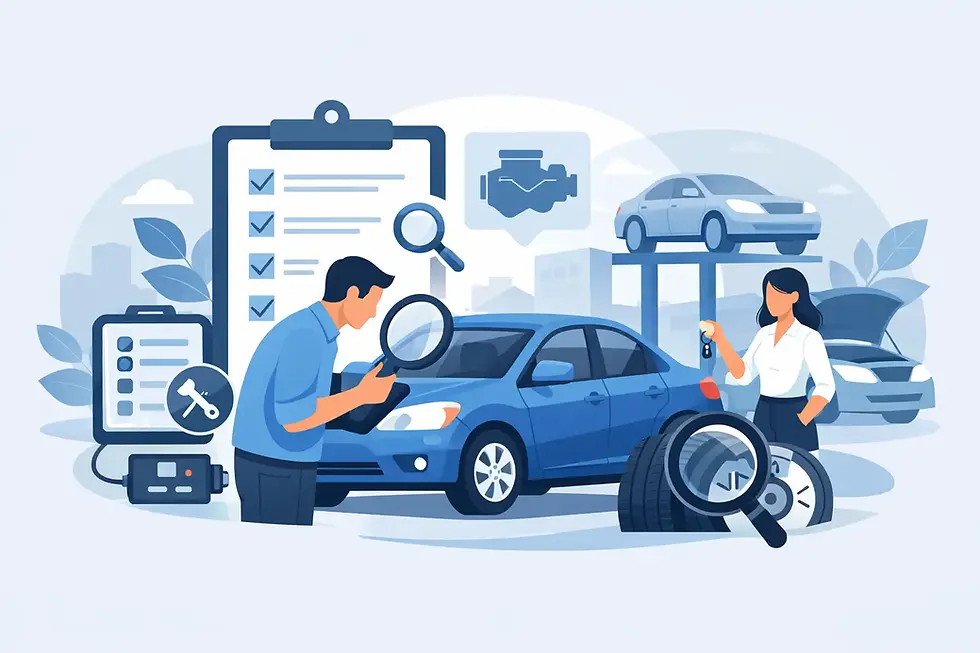
You don’t need to be a mechanic to perform a basic inspection. Here are practical steps to follow:
Start with a walk-around: Look for obvious damage, rust, or leaks.
Open the bonnet: Check fluid levels and look for leaks or corrosion.
Test the lights and electrical features: Make sure everything works.
Check the tyres: Measure tread depth and look for damage.
Take a test drive: Listen for unusual noises, test brakes, and check gear changes.
Look under the car: Use a torch to spot leaks or rust.
If you spot anything worrying, ask for a professional inspection. A detailed report can save you from costly repairs later.
Why Professional Vehicle Inspections Are Worth It
While a basic check is helpful, a professional inspection goes deeper. Experts use diagnostic tools and have the experience to spot hidden faults. They provide a clear, honest report on the car’s condition. This report helps you negotiate or walk away if the car is not right.
A professional inspection covers all the essential vehicle inspection topics thoroughly. It includes checks on the engine, transmission, brakes, suspension, bodywork, and more. This service is especially valuable when buying from auctions or private sellers where you cannot test the car extensively.

Taking Action After Your Inspection
Once you have inspected the vehicle or received a professional report, use the information wisely:
Negotiate the price: Use any faults or repairs needed as leverage.
Request repairs: Ask the seller to fix major issues before buying.
Walk away: If the car has serious problems, it’s better to find another.
Plan future maintenance: Knowing the car’s condition helps you budget for upcoming repairs.
Remember, a thorough inspection is your best protection against hidden faults. It gives you peace of mind and confidence in your purchase.
Protect Yourself with the Right Knowledge
Understanding essential vehicle inspection topics is the first step to buying a used car with confidence. Whether you inspect the car yourself or hire a professional, focus on the key areas that affect safety and value. Use clear, simple checks and don’t hesitate to ask for expert help.
For anyone serious about buying a used car, a vehicle inspection blog can be a valuable resource. It offers tips, checklists, and advice tailored to the UK market. Staying informed helps you avoid costly mistakes and enjoy your new car worry-free.
Take control of your used car purchase today by learning these essential vehicle inspection topics. Your future self will thank you.


Comments